Start with a small, friendly invitation
Try inviting four to eight people for your first get-together. That is a suggested starting size, not a rule: a club of three can be lovely too. Ask friends, neighbours or people you already know whether they fancy a relaxed conversation about books. Explain that the first meeting is to meet one another and choose a read together. Nobody needs to buy or finish a book beforehand. A personal message can feel easier to answer than a public announcement. Give people a clear date, place, finishing time and way to reply.
Choose a place everyone can use
A living room, a quiet café or a bookable community room could work. Check any booking conditions and costs before inviting people. Think about stairs, seating, toilets, transport and whether the room is quiet enough for conversation. Ask privately if anyone needs an adjustment; you need not ask them to explain why. If you meet at home, send the address directly to invited guests rather than posting it publicly. Agree a manageable time—perhaps an hour for the first meeting—and stick to the advertised finish. Hosting should fit around your life.
Keep the first meeting simple
Here is a possible one-hour plan: spend the first ten minutes introducing yourselves and mentioning a book you enjoyed; use the next fifteen to talk about the sorts of stories people want to try; spend twenty choosing the first book and checking how everyone can get it; leave fifteen minutes to agree the next date and chat. This is your group, so adapt it. Tea and biscuits are optional. Tell people they can bring a favourite book or one suggestion, and reassure them that there will be no quiz.
Pick a book people can actually obtain
Collect two or three suggestions, then check length, availability, cost and preferred formats before voting. A beautiful choice is less helpful if only one person can obtain it in time. Ask about library copies, ebooks, audiobooks and second-hand editions. Library availability varies, so check locally rather than promising that everyone can borrow the same title. Give people enough time to read at their own pace. Decide together whether you want a shorter novel, a mystery, a classic or something completely different. Our book club picks guide offers starting points; there is no compulsory club reading list.
Agree a few kind ground rules
Let everyone finish their thought and make space for quieter members without putting them on the spot. It is fine to dislike the chosen book and fine to change your mind during the conversation. Discuss the story rather than judging somebody else’s taste. Before discussing the ending, check who has finished and explain that spoilers are about to begin. You could start with a spoiler-free conversation, then move on to the whole book. People who have not finished should still feel welcome, with a clear choice about hearing the ending.
Try questions that invite a real conversation
Begin with “What stayed with you?” rather than asking for a star rating. Other useful questions are: Which character did you understand best? Was there a decision you would have made differently? Did the setting affect the way you felt? Was there a passage you wanted to reread? Who might enjoy this book? Keep a few questions ready, but follow interesting threads when they arise. A conversation does not have to cover every theme to be worthwhile. If nobody agrees about a character, that can be the most interesting part.
Make organising fair and affordable
Before everyone leaves, choose the next date and decide who will send a reminder. Rotate hosting or organising if people want to; nobody should be obliged to provide food or a home. Keep any group chat optional and ask permission before adding someone or sharing their phone number. Agree costs in advance, including venue fees and purchases. Do not turn the club into a shopping commitment. If a member cannot get the book, talk about an alternative format or change the choice rather than leaving them behind.
Your free book club invitation
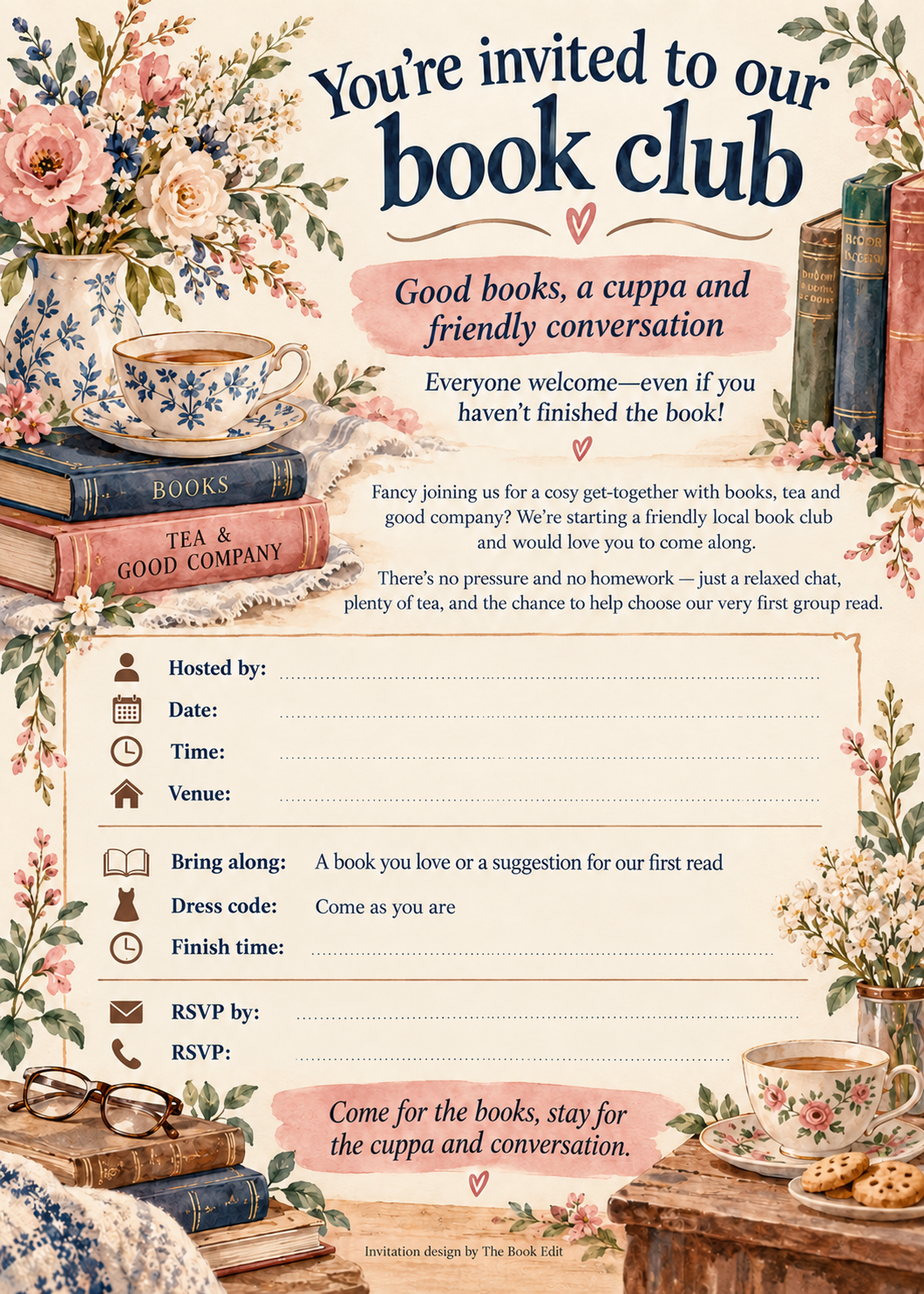
Use Sandy’s watercolour invitation to get your own group started. It has blank spaces for your host name, date, start time, venue, finish time, RSVP deadline and contact details. The wording welcomes everyone, including people who have not finished the book. Choose the download that suits you below.
Make it your own
Free for your own book club—print it or send it to friends. Please do not resell the invitation.
Print: the card is 5 × 7 inches. Choose actual size on suitable paper, or fit to an A4 sheet and trim.
Type: save the fillable PDF and open it in a PDF reader such as Adobe Acrobat Reader. Fill in the seven fields, save a copy, then reopen it to check your details before sharing. Some browser and phone previews do not support filling forms.
Canva: upload the image to a 5 × 7 inch design and add text boxes over the dotted lines. This PNG is a flat image, not an editable Canva template.
A quick checklist before you send it
Check that the date and venue are correct, the finishing time is clear and people know how to reply. If booking is needed, confirm it first. Ask guests to bring a favourite book or a suggestion for the first group read. Send the invitation privately when it includes your home address or personal contact details. Once the replies arrive, a short reminder near the meeting is enough. You are inviting people to good company, not setting an exam.
Let the club grow at its own pace
After two or three meetings, ask what people enjoy and what could be easier. Perhaps you need longer between books, an earlier start or a wider mix of genres. A small regular group is a success if people look forward to coming. You can occasionally choose a short story, talk about books already read or have a recommendation evening. The important thing is that the club remains welcoming and manageable for the people in it.